
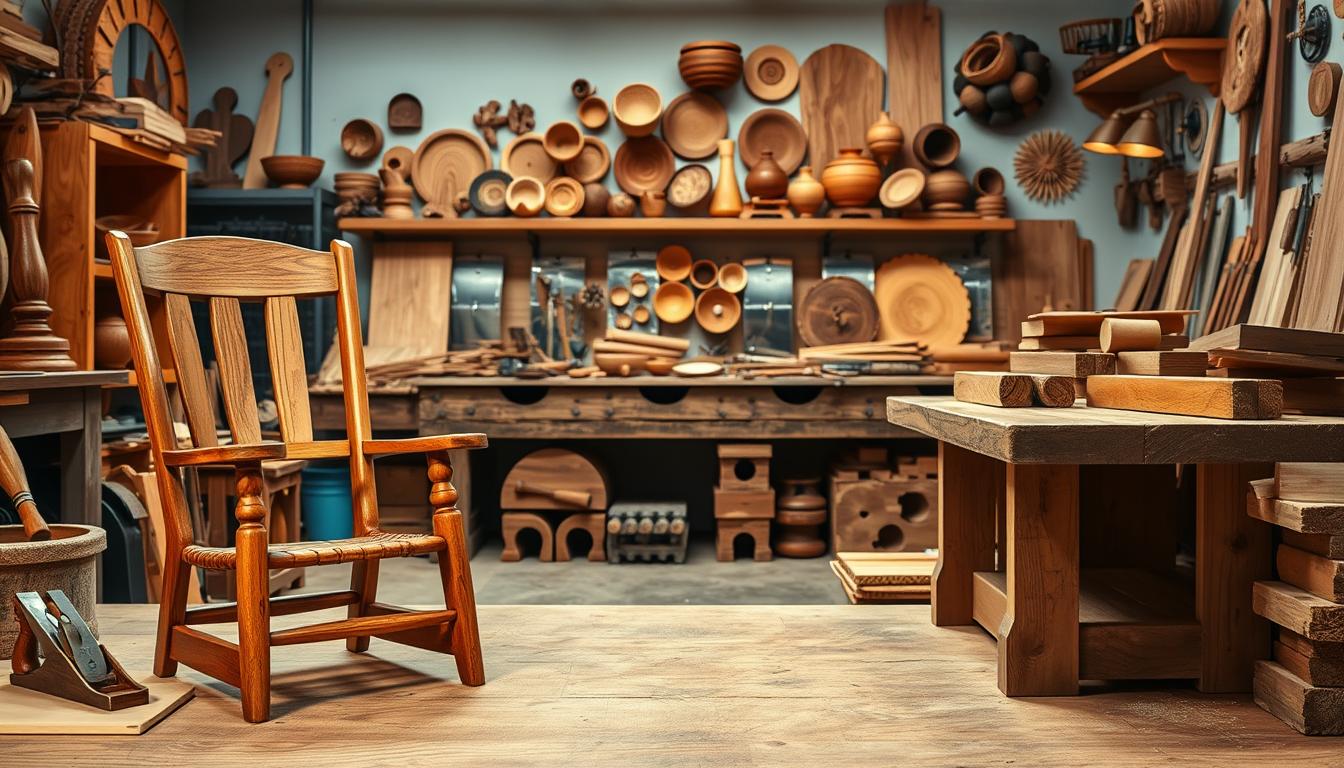
“The workshop is a place where imagination knows no bounds,” says Norm Abram, a renowned woodworker. As I reflect on my journey with DIY woodworking, I’m reminded of the joy and satisfaction that comes from creating something with my own hands.
I’ve always been fascinated by the world of woodworking projects. Here, creativity meets technical skill. In this article, I’ll share some of my favorite projects for you to try. They range from beginner-friendly ideas to more advanced challenges.
Key Takeaways
- Explore a variety of woodworking projects suitable for different skill levels.
- Discover beginner-friendly DIY woodworking ideas to get you started.
- Learn about the essential tools and materials needed for your projects.
- Find inspiration for your next woodworking project.
- Get tips on how to improve your woodworking skills.
Why Woodworking Became My Favorite Hobby
Woodworking has become a big part of my life. It’s not just about making things with my hands. It’s also about the joy and satisfaction of seeing a project come to life.
My Woodworking Journey
I started with simple beginner woodworking projects I found online. I loved the idea of making something from scratch. As I got better, I learned how important the right woodworking plans are.
The EPA says it’s key to use safe materials. This made me more careful about what I use.
The Joy of Creating Something with Your Hands
One of the best things about woodworking is seeing what I’ve made. It makes me feel proud and accomplished. Whether it’s a simple cutting board or a complex piece of furniture, it’s rewarding.
Here’s a look at different woodworking projects and what they require:
| Project Type | Complexity Level | Skill Level Required |
|---|---|---|
| Simple Cutting Board | Low | Beginner |
| Rustic Floating Shelves | Medium | Intermediate |
| Handcrafted Dining Table | High | Advanced |
Woodworking projects vary from simple to complex. They suit different skill levels and interests. This variety is what makes woodworking so enjoyable for me.
Essential Woodworking Tools for Beginners
Starting woodworking needs a good set of tools. Beginners should know the basic hand tools, power tools, and safety gear. These are key for successful projects.
Basic Hand Tools to Start With
Every woodworking project starts with the right hand tools. You’ll need a tape measure for measuring, a marking gauge for precise marks, and chisels for small wood removal. A hand saw or coping saw is crucial for accurate cuts.
Power Tools Worth Investing In
As you get better, you’ll need power tools. A table saw is key for straight cuts. A miter saw is great for angled cuts. A drill press helps with precise holes.
Safety Equipment You Shouldn’t Skip
Safety is always first in woodworking. The EPA’s updates on formaldehyde emissions from wood products show why safety gear is vital. Always wear safety glasses and ear protection to protect yourself. A dust mask or respirator is essential for dust or particle work.
| Tool Type | Tool Name | Purpose |
|---|---|---|
| Hand Tool | Tape Measure | Measuring wood |
| Power Tool | Table Saw | Making straight cuts |
| Safety Equipment | Safety Glasses | Protecting eyes |
Understanding Wood Types and Selection
As a woodworking enthusiast, I’ve learned that knowing different wood types is key. The wood you choose can greatly affect your project’s look and function.
Softwoods vs. Hardwoods
Wood types mainly fall into softwoods and hardwoods. Softwoods come from coniferous trees and are softer and less dense. Hardwoods, from deciduous trees, are harder and denser. Softwoods like pine are great for framing and construction, while hardwoods such as oak are ideal for furniture making due to their durability.
How to Choose the Right Wood for Your Project
When picking wood, think about what your project needs. For outdoor projects, durable and rot-resistant woods like cedar are excellent choices. For indoor furniture, hardwoods like maple or cherry can provide a beautiful finish. Always inspect the wood for defects before buying.
| Wood Type | Characteristics | Best Use |
|---|---|---|
| Pine | Soft, less dense | Framing, construction |
| Oak | Hard, dense, durable | Furniture making |
| Cedar | Rot-resistant, durable | Outdoor projects |
Where I Source My Lumber
I get my lumber from local hardware stores and online suppliers. Local stores offer the advantage of inspecting the wood, while online suppliers have a wider variety. Always think about sustainability and cost when choosing.
My Favorite Beginner-Friendly Woodworking Projects
Woodworking projects for beginners are great for learning new skills. I’ll show you some of my top picks. These projects teach you woodworking techniques and help you make beautiful items for your home.
Simple Cutting Board
Making a simple cutting board is a great first project. It’s easy to set up and helps you practice measuring and cutting.
Materials Needed
- 1 piece of hardwood (e.g., maple or walnut)
- Sandpaper
- Wood finish
- Cutting tools (e.g., table saw or hand saw)
Step-by-Step Instructions
- Cut your hardwood to the desired size for your cutting board.
- Sand the surface to smooth out any rough edges.
- Apply a wood finish to protect the wood.
Rustic Floating Shelves
Rustic floating shelves add warmth to any room. This project teaches you about woodworking joinery and how to achieve a modern look.
Materials Needed
- Wood for shelves (e.g., reclaimed wood)
- Brackets
- Drill
- Level
Step-by-Step Instructions
- Measure and cut your wood to the desired length for your shelves.
- Attach brackets to the wall, ensuring they are level.
- Place the shelves onto the brackets.
Easy Picture Frames
Building easy picture frames is a great project for beginners. It teaches you about precise measuring and assembling.
Materials Needed
- Wood for the frame
- Glass or acrylic front
- Backing material
- Frame hardware (e.g., nails, glue)
Step-by-Step Instructions
- Cut your wood to the correct dimensions for your frame.
- Assemble the frame using nails or glue.
- Attach the glass or acrylic front and backing material.
These projects are just the start of your woodworking journey. As you finish them, you’ll grow more confident and skilled. A seasoned woodworker once said,
“The best way to learn woodworking is by doing it.”
Weekend Woodworking Projects for Intermediate Skills
Intermediate woodworking skills open up a world of creative possibilities. I’ve found these projects to be both challenging and rewarding. As you continue to hone your craft, taking on more complex projects can be a great way to build confidence and expand your skill set.
Here are a few projects that I’ve enjoyed working on and that I think you’ll find engaging. Each project comes with its own set of challenges and rewards. They can be completed over a weekend with the right planning.
Farmhouse Coffee Table
A farmhouse coffee table is a beautiful addition to any living room. It offers a rustic charm that’s hard to resist. To make one, you’ll need:
Materials Needed
- Reclaimed wood or oak for the tabletop
- Wood for the legs and frame
- Wood screws and wood glue
- Sandpaper and finish of your choice
Step-by-Step Instructions
Start by cutting the wood for the legs and frame, using a table saw or circular saw. Assemble the frame using wood screws and glue, ensuring it’s sturdy and square.
Next, prepare the tabletop by sanding it smooth and applying your chosen finish. Once dry, attach the tabletop to the frame using screws from underneath.
Wooden Planter Box
A wooden planter box is a versatile project. It can add a touch of greenery to your home or garden. For this project, you’ll need:
Materials Needed
- Cedar or pressure-treated wood for durability
- Wood screws and hinges
- Nails or a nail gun
- Soil and plants of your choice
Step-by-Step Instructions
Begin by cutting the wood to size for the planter box. Assemble the box using nails or a nail gun, and attach the hinges if you want a lid.
Sand the box to smooth out any rough edges and apply a finish if desired. Fill with soil and your chosen plants, and enjoy your new planter box.
“The best thing about woodworking is that it allows you to create something with your own hands, giving you a sense of pride and accomplishment.” – Anonymous
Wall-Mounted Desk
A wall-mounted desk is a practical project. It’s perfect for small spaces. To make one, you’ll need:
Materials Needed
- Plywood or MDF for the desktop
- Brackets or corbels for support
- Screws and a drill
- Decorative trim (optional)
Step-by-Step Instructions
Cut the plywood or MDF to size for the desktop. Attach the brackets or corbels to the wall, ensuring they’re level and securely fastened.
Mount the desktop to the brackets, using screws to secure it in place. Add any decorative trim if desired to give it a finished look.
These weekend woodworking projects offer a great way to challenge your skills and create something beautiful and functional. With woodworking plans and a bit of inspiration, you can bring these projects to life and enjoy the satisfaction of creating something with your own hands.
Advanced Woodworking Projects I’m Proud Of
Over the years, I’ve improved my woodworking skills. I’ve worked on advanced projects that challenge me and let me create something unique and useful.
Handcrafted Dining Table
I’m especially proud of a handcrafted dining table made from solid oak. It needed careful planning and execution.
Materials Needed
- Solid oak wood
- Wood glue
- Wood finish
- Metal legs (optional)
Step-by-Step Instructions
- Cut the oak wood into the required dimensions for the table top.
- Assemble the table frame using wood glue and appropriate joinery.
- Apply a wood finish to protect the wood and enhance its appearance.
- Attach metal legs if desired for a modern touch.
Built-In Bookcase with Cabinet
I’m also proud of a built-in bookcase with a cabinet. It shows my skill in making useful storage solutions.
Materials Needed
- Plywood or MDF for shelves
- Wood for the frame
- Decorative trim
- Cabinet hardware
Step-by-Step Instructions
- Measure the wall space where the bookcase will be installed.
- Cut the wood for the frame and shelves according to the measurements.
- Assemble the frame and attach the shelves.
- Add a cabinet and decorative trim to finish the project.
Wooden Rocking Chair
The wooden rocking chair is another advanced project that shows my skills. It needs careful design and precise joinery.
Materials Needed
- Hardwood for the frame
- Wood for the seat and backrest
- Wood glue
- Screws and dowels
Step-by-Step Instructions
- Design the rocking chair, considering ergonomics and aesthetics.
- Cut the wood according to the design specifications.
- Assemble the frame using appropriate joinery techniques.
- Attach the seat and backrest, ensuring comfort and durability.
These advanced woodworking projects have improved my skills and created beautiful, functional pieces for my home. By following these guides, you can also make your own advanced woodworking projects.
| Project | Materials | Skills Required |
|---|---|---|
| Handcrafted Dining Table | Solid oak, wood glue, wood finish | Precision cutting, joinery |
| Built-In Bookcase | Plywood, wood for frame, decorative trim | Measuring, assembling, finishing |
| Wooden Rocking Chair | Hardwood, wood glue, screws | Designing, joinery, assembling |
Essential Woodworking Techniques to Master
As I work on improving my woodworking skills, I’ve learned how vital mastering basic techniques is. Whether you’re just starting or have been woodworking for a while, knowing these techniques well is key to making great projects.
Joinery Methods I Use Most Often
Joinery is the core of woodworking. Learning various joinery methods is crucial for making sturdy and lasting pieces. Techniques like mortise and tenon, dovetail, and dado joints are common. Each has its own use and needs precision and practice to get right.
Mortise and tenon joints are great for strong frames. Dovetail joints are excellent for drawers because they resist pulling apart. Knowing when and how to use these joints can greatly improve your project’s quality.
Finishing Techniques for Professional Results
The finish of a woodworking project is crucial. I’ve learned that the right finishing techniques are as important as the build itself. This includes getting the surface ready, picking the right finish, and applying it correctly.
- Prepare the surface by sanding it to a smooth finish.
- Choose a finish that complements the wood type and intended use of the project.
- Apply the finish according to the manufacturer’s instructions, usually in thin coats.
Measuring and Cutting Accurately
Accuracy is essential in woodworking. Being precise with measurements and cuts is fundamental. I’ve found that using top-notch measuring tools and double-checking measurements can greatly reduce mistakes.
Also, using the right cutting tools and techniques, like a sharp saw blade and precise cuts, ensures your pieces fit perfectly.
Woodworking Projects That Sell Well at Craft Fairs
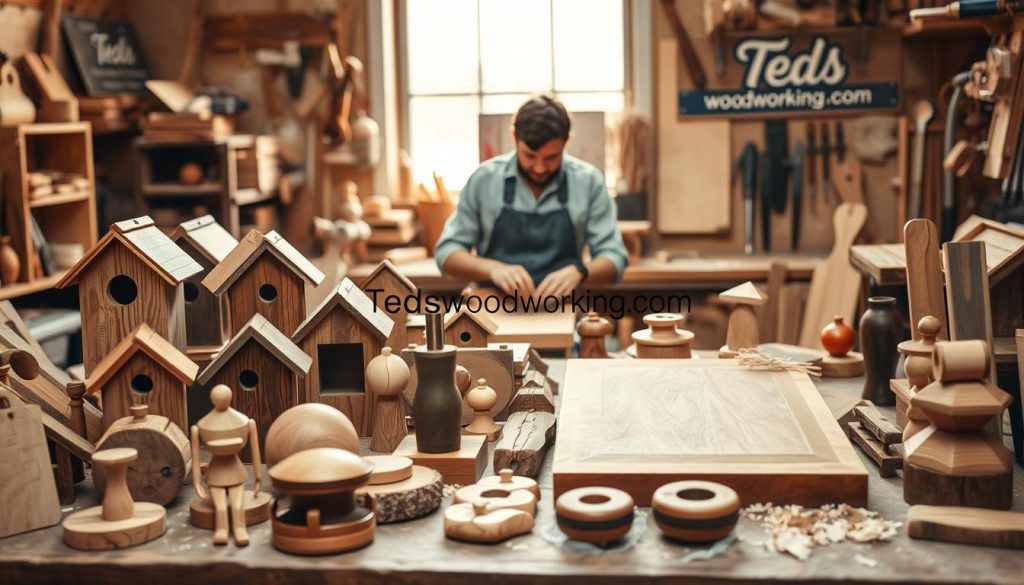
I’ve had success selling my woodworking projects at local craft fairs. I’m excited to share my insights. Craft fairs are a great way to show off your woodworking skills and meet potential customers. To sell well, make projects that appeal to many people.
Small Gift Items That Customers Love
Small gift items are always popular at craft fairs. Some great ideas include:
- Wooden coasters with custom designs
- Handmade cutting boards
- Engraved wooden boxes
- Customized picture frames
These items are useful and make great gifts. By offering different designs and customization, you can meet various tastes and preferences.
Home Decor Pieces Worth Making
Home decor pieces are also in demand. Consider making:
- Wooden wall art with unique designs
- Reclaimed wood shelves
- Handcrafted wooden candle holders
- Customized wooden signs
These items can make any room look better. Use quality materials and focus on details to make your pieces stand out.
How to Price Your Woodworking Projects
Setting the right price for your woodworking projects is key to making sales at craft fairs. Think about the cost of materials, time, and other expenses when setting prices. Here are some tips:
- Research your competition to understand the market
- Calculate your costs and add a markup
- Consider offering discounts for bulk purchases
- Be prepared to negotiate prices
By pricing your projects right and being open to negotiation, you can attract more customers and boost your sales.
Where to Find Inspiration for New Woodworking Projects
As I keep exploring woodworking, finding new project ideas is key. I’ve found many sources that spark my creativity and guide me. These sources help me stay excited about my next woodworking projects.
Online Resources and Communities
The internet is full of woodworking inspiration. Websites, forums, and social media are all about woodworking. I love visiting online communities to see what others are making. It often gives me ideas for my own projects.
Books and Magazines I Recommend
I still love woodworking books and magazines, even in today’s digital world. They’re full of project plans, techniques, and trends. My top picks are Fine Woodworking and Wood Magazine.
Local Woodworking Classes and Workshops
Going to local woodworking classes and workshops is super helpful. I learn new skills and meet other woodworkers. We share our experiences and ideas, which often leads to new projects.
| Source of Inspiration | Description | Benefits |
|---|---|---|
| Online Communities | Websites, forums, and social media dedicated to woodworking | Access to a wide range of projects, techniques, and feedback from other woodworkers |
| Books and Magazines | Publications offering project plans, techniques, and industry trends | Detailed plans and inspiration from experienced woodworkers, staying updated on the latest trends |
| Local Classes and Workshops | Hands-on training and networking with local woodworkers | Learning new skills, getting feedback, and gaining inspiration from direct interaction |
Conclusion: Why You Should Try These Woodworking Projects
Sharing my favorite woodworking projects reminds me of the joy of making something by hand. These projects help you learn new skills, like measuring and cutting right. You’ll also get better at different joinery methods.
Start with easy projects like a cutting board or picture frames. This will boost your confidence. Then, you can tackle more challenging projects, like a farmhouse coffee table or a wooden rocking chair. Making something yourself is rewarding and lets you add a personal touch to your home.
I urge you to dive into woodworking and pick projects that excite you. With time and effort, you’ll make stunning pieces that show off your skills. So, pick up your tools, choose a project, and begin your woodworking adventure.

Leave a Reply